How we teach
Except Academy teaches people to work on whole systems. The courses are built around doing that work rather than hearing about it, so most of the time in a course is spent making something with a group.
Who comes, and what they come to learn
Participants arrive from very different places. Some have been given responsibility for a sustainability programme and want a way to organise it. Some are engineers, designers or planners who keep running into questions their own discipline cannot settle on its own. Some teach already, and are looking for a framework they can teach with.
What they have in common is the kind of question they work on. It crosses more than one field, the parts of it are tied to each other, and a change made in one place turns up somewhere else. Learning to see that whole, and to work with it rather than around it, is what the courses are for.
What the courses cover
-
Systems and states
What makes something a system, how you draw its boundary, and how to read the state it is in. A system that can keep flourishing without inputs from outside its own boundaries is what SiD calls sustainable, and that definition is precise enough to work from.
-
Resilience, autonomy and harmony
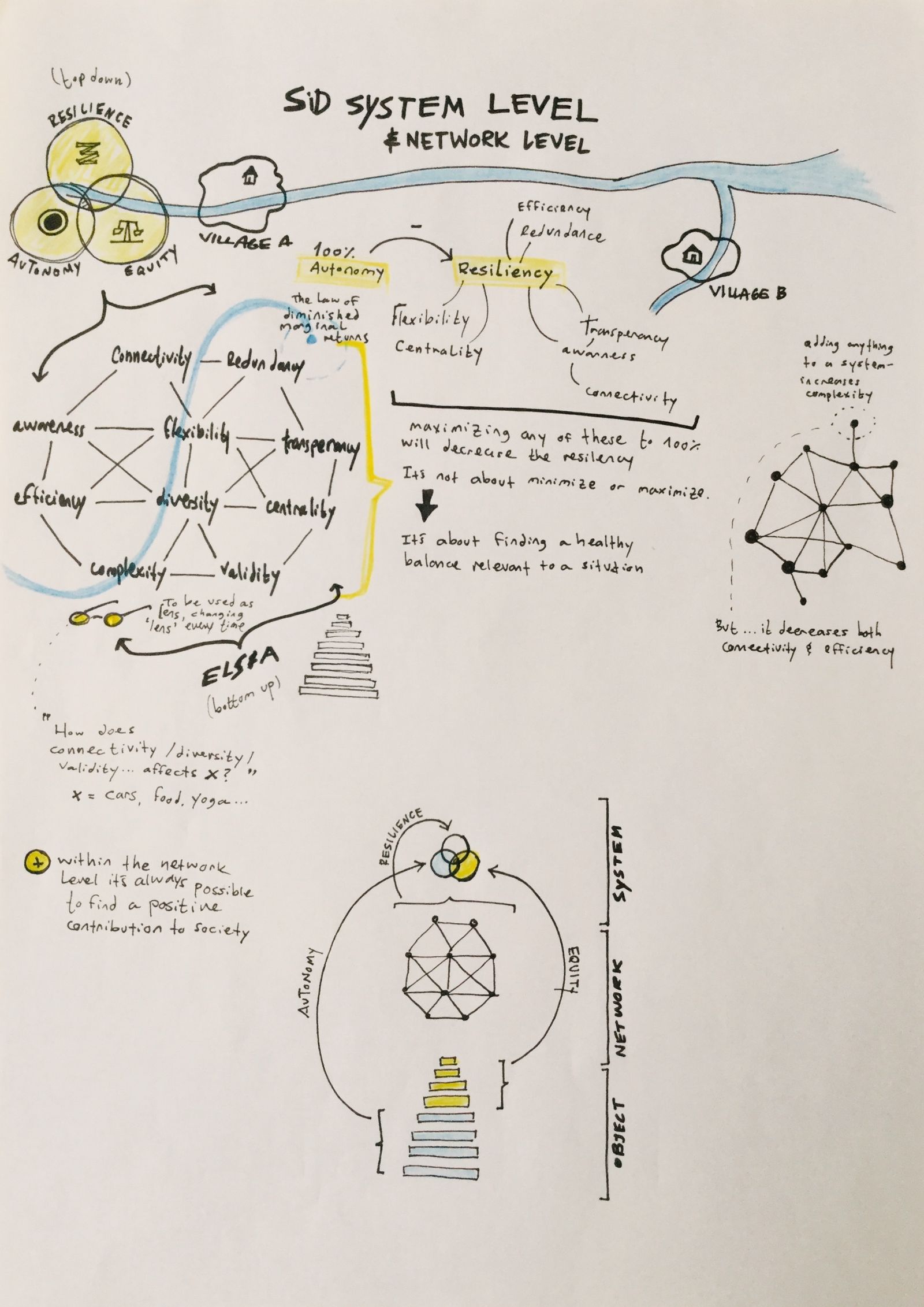
The three indicators a system is judged on. Resilience is the capacity to take an unexpected disturbance and return to a healthy state, which is a different property from strength, and it is built out of diversity, redundancy, flexibility and connectivity. It is also the part scenario planning tends to miss: when a fire destroyed Toyota's sole supplier of a brake component in 1997, production resumed in five days, and what made that possible was the structure of the supplier network rather than any contingency document. Autonomy is how far a system depends on others for its materials, its decisions and its trade. Harmony is fairness, read as the amount of internal tension the system carries.
-
System dynamics
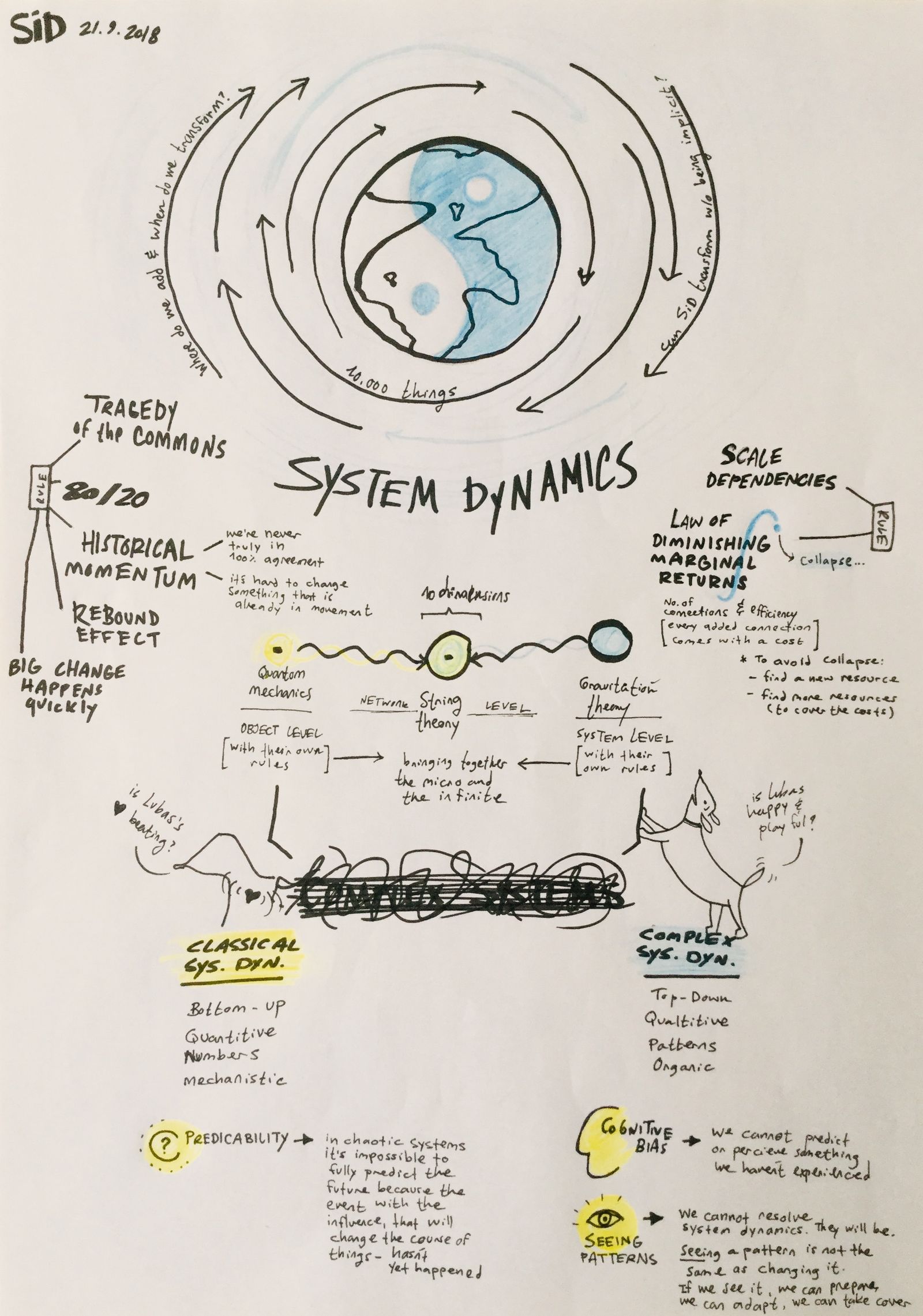
How feedback holds a system in the state it is in, why a structure keeps producing the same behaviour whoever happens to be running it, and how to tell a symptom apart from what is generating it. Along with it come the patterns that recur across systems: the tragedy of the commons, historical momentum, the rebound effect, and the cost that every added connection in a network carries.
-
The integrated spectrum
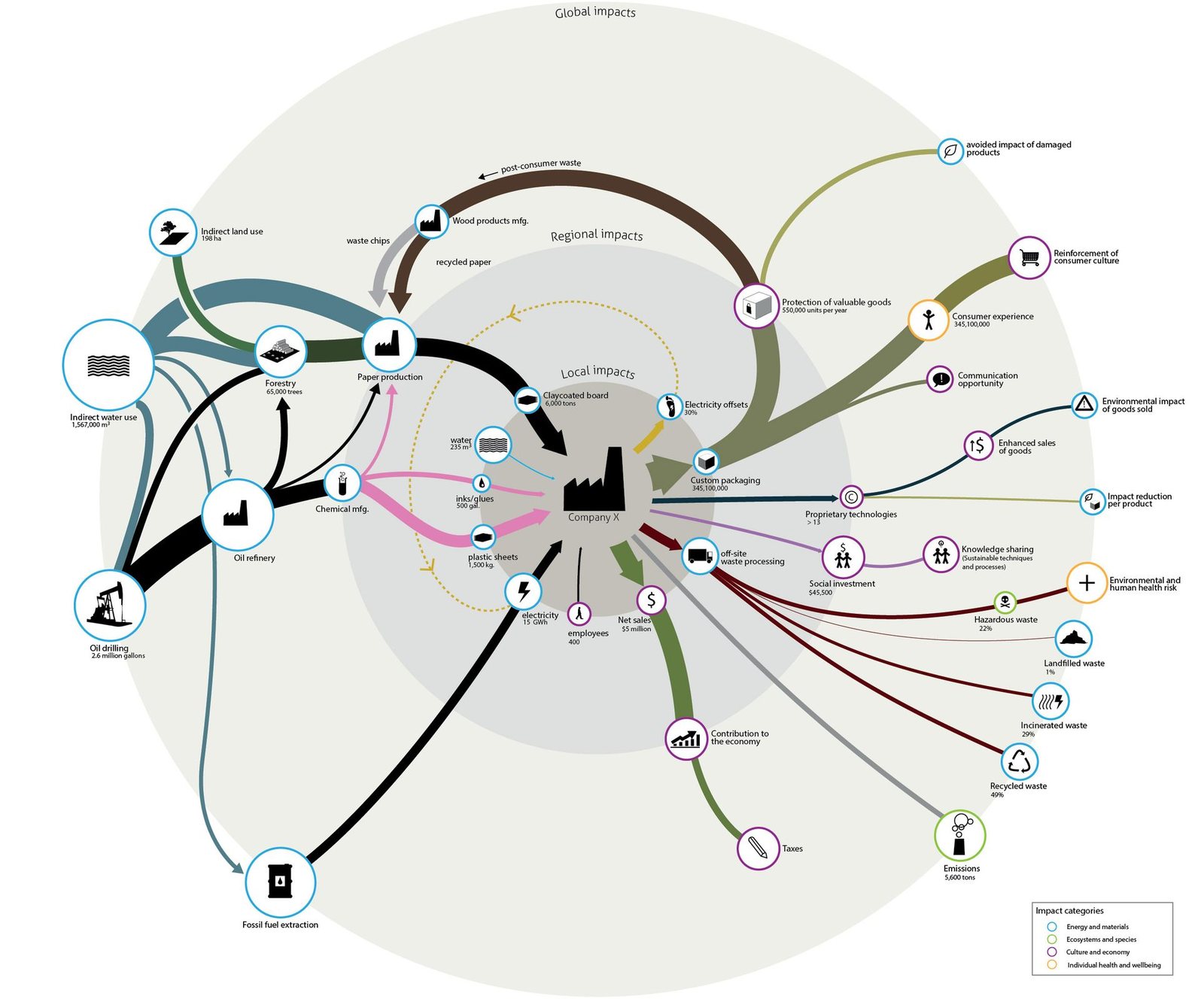
Energy and materials, ecosystems and species, culture and economy, health and happiness. The circular and bio-based economy, industrial ecology and social justice sit inside that spectrum rather than each claiming the whole subject. Circularity is a case in point: the share of materials cycling back into the world economy fell from 9.1 per cent in 2018 to 7.2 per cent in 2023, through a period of record investment in circular programmes, because material loops designed at product level cannot correct a failure that sits in the system around them.
-
Transition practice
You almost never start with a blank sheet, so the question is how to move a system from the state it is in to a better one. This part covers the language and the approaches used for systemic transitions, goal adjustment along the way, and the actions that carry a system from one state to another.
-
Goals, indicators and roadmaps
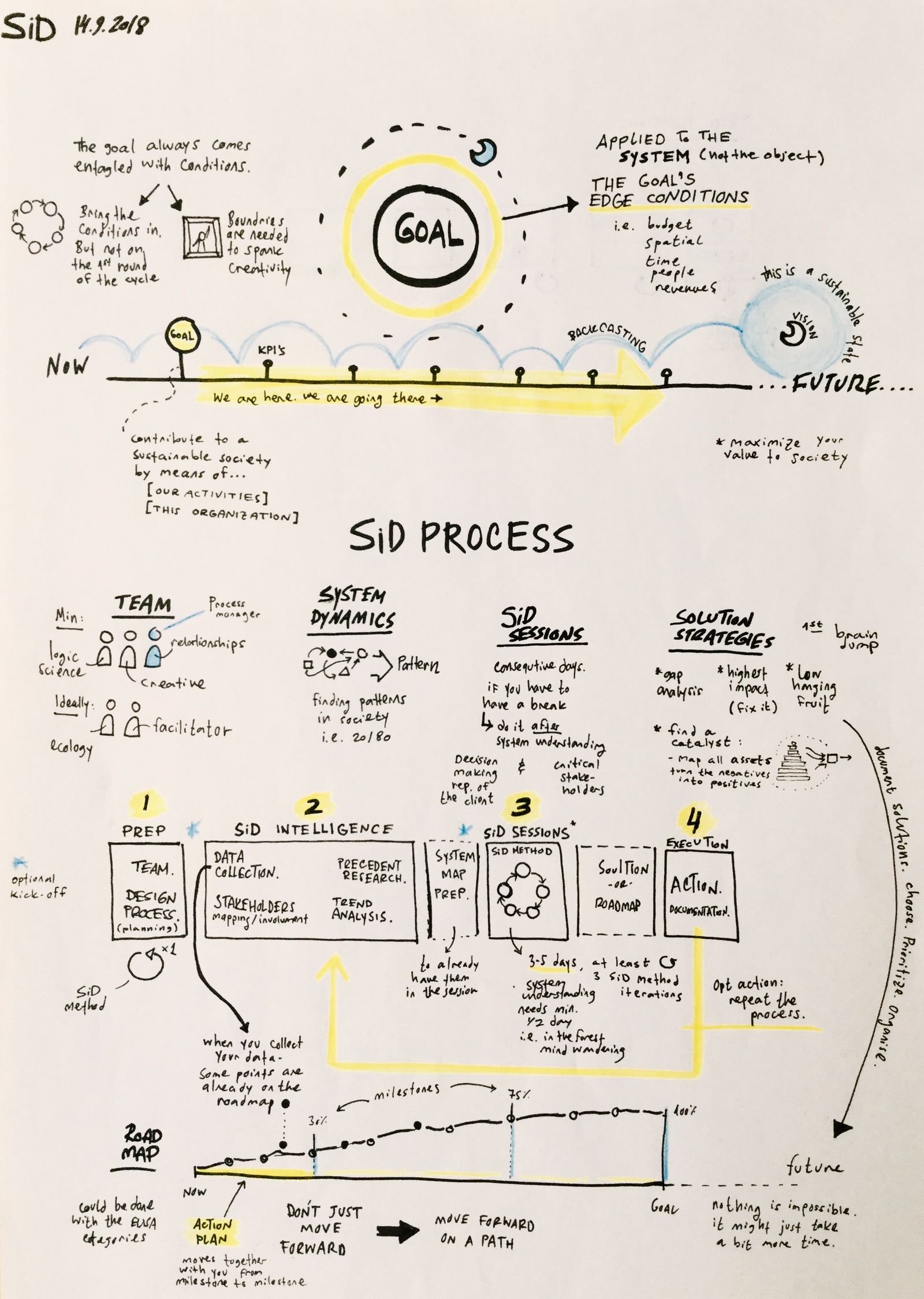
Setting goals at the level of the system rather than the object, with the boundary conditions and indicators that come with them, and building a roadmap: a long-term trajectory with a short-term action plan of three months to three years underneath it, carrying milestones, responsibilities and a review cycle. This is also where the difference between a sustainability strategy and an ESG strategy gets worked out. ESG is a financial risk management tool built for investors, and a company can score well on it while the underlying business is unchanged. A sustainability strategy is the roadmap that brings the operation inside ecological and social limits, and treating the first as if it were the second is a costly mistake.
-
Co-creation and stakeholders
Running the process with the people who hold a stake in it: who needs to be in the room, when to bring them in, and how to keep a process together across departments and organizations that do not answer to each other.
In the room
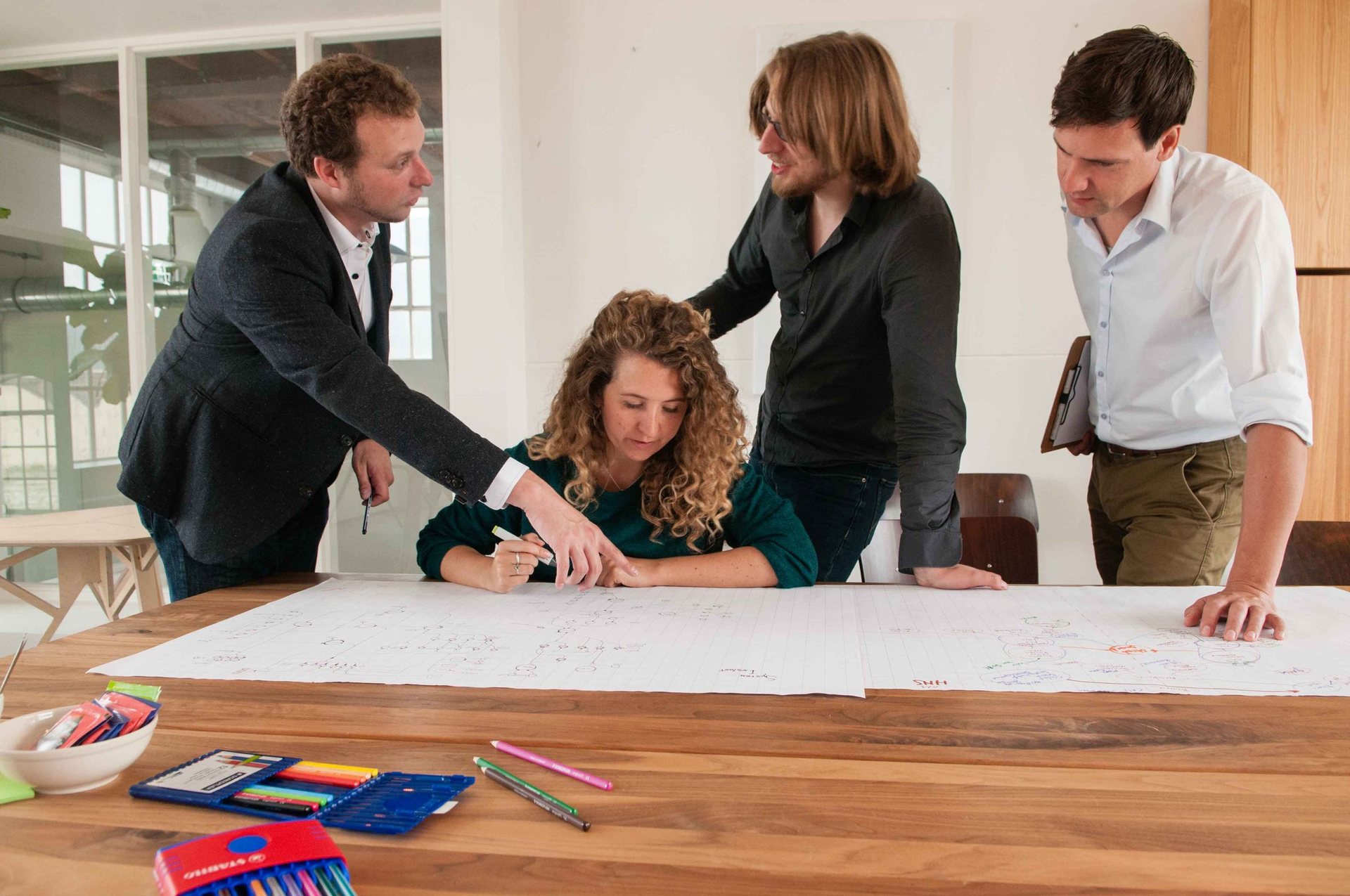
A course is a working session. The group spends most of its time at a large sheet of paper, on a table or pinned up on the wall, drawing the system it is dealing with: the parts of it, what depends on what, who decides, and where the money and the materials go. The drawing gets added to, argued over, rubbed out and made again during the day.
We use very few slides. Theory comes in where it is needed to explain something the group has just run into, and the rest of it is published on ThinkSiD.org for anyone who wants to read further.
Groups are put together from different disciplines on purpose. Someone from finance, someone from engineering and someone from policy will each describe the same system in a different way, and working on one drawing brings those descriptions into contact with each other.
Where the subject allows it, we take the group out to see the thing itself, whether that is a factory, a neighbourhood or a stretch of river. Standing in the place gives people a different understanding of it than a report does.
What you learn to do, in five steps
-
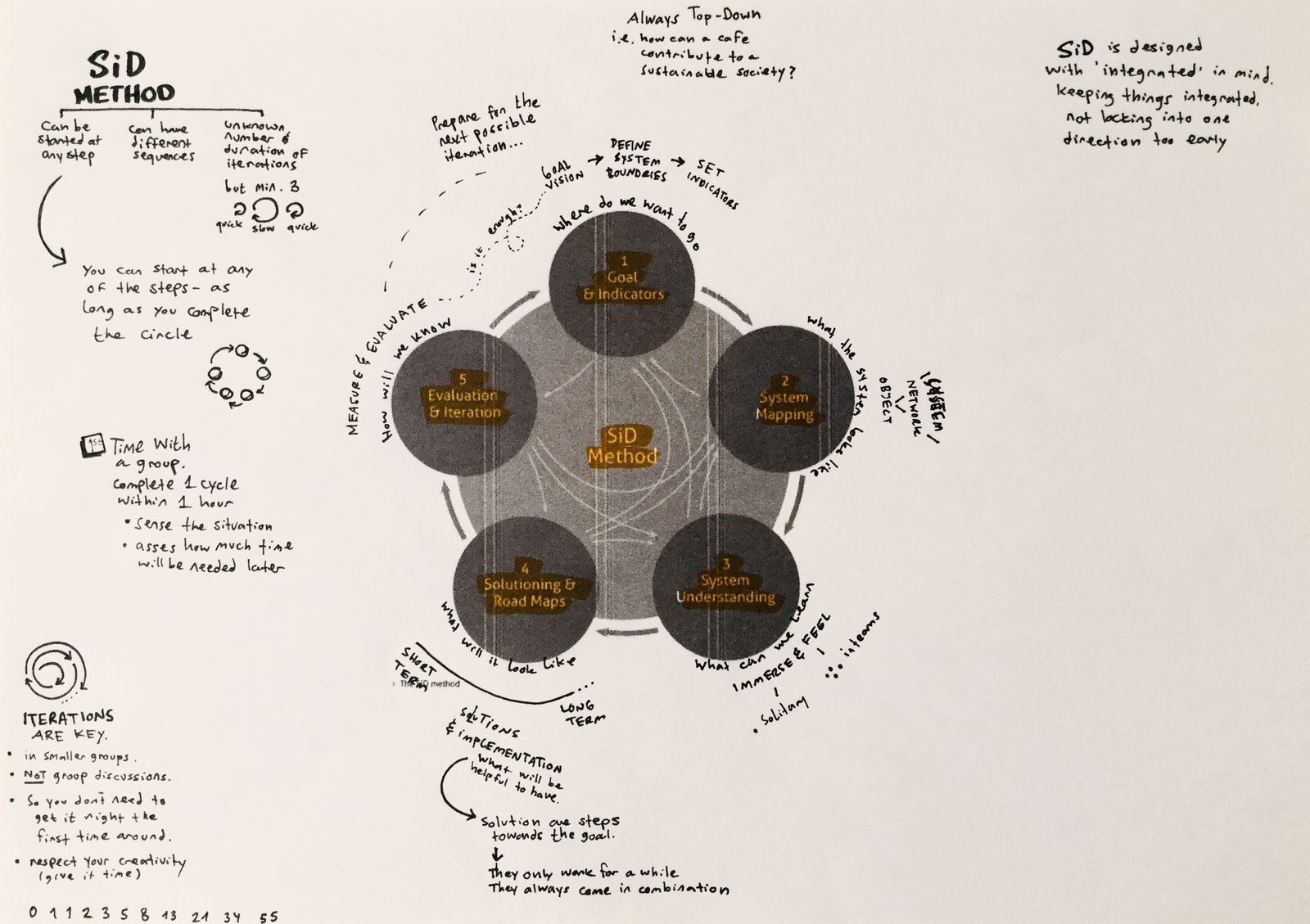
Goals and indicators
The group agrees what it is aiming at in terms specific enough to measure, and draws the boundary around the system it will work on.
-
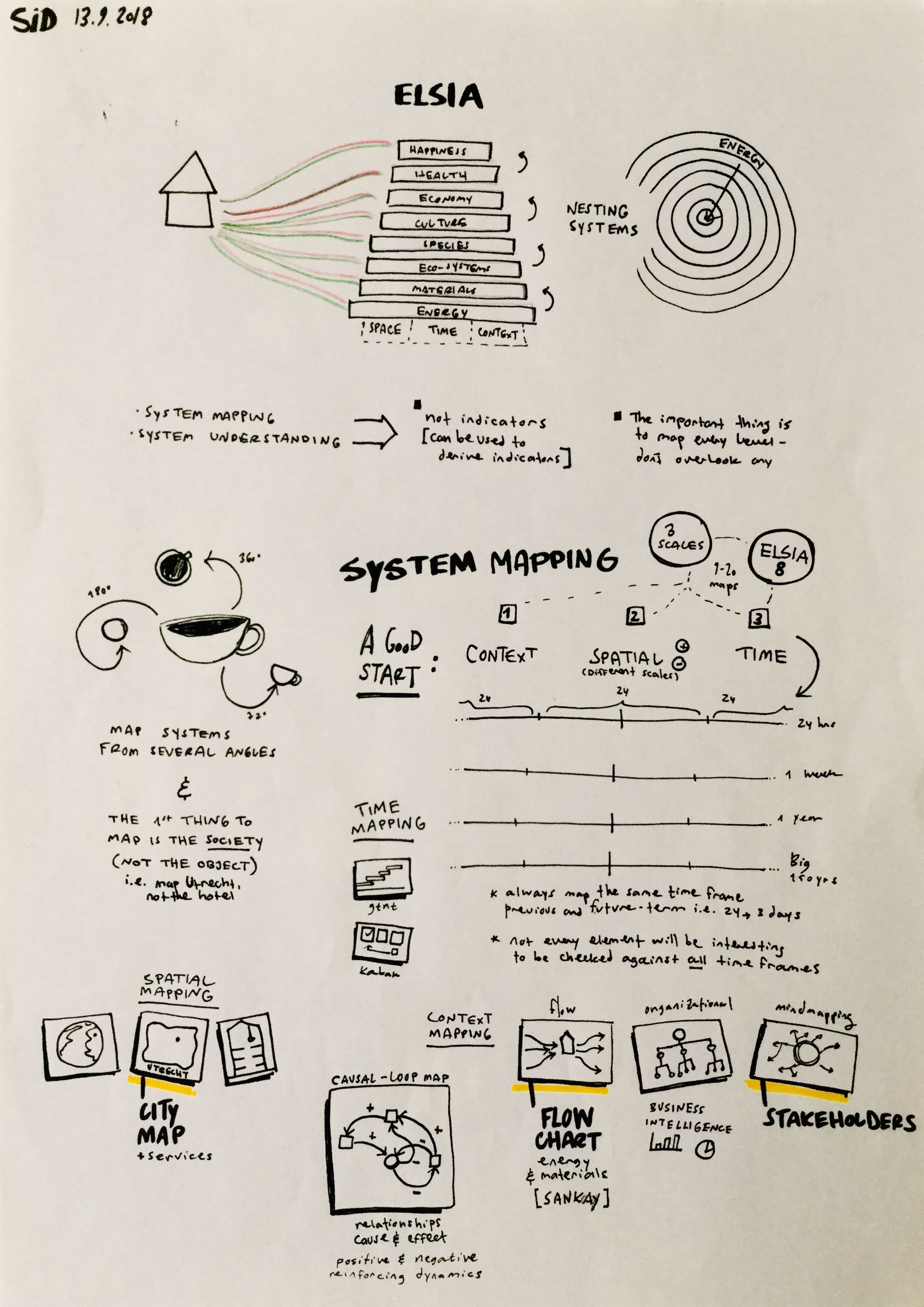
System mapping
Complex systems rarely come with a map, so the group builds one out of whatever it can gather: documents, numbers, and what the people in the room already know.
-
System understanding
The group then reads the map: where the system stands now, how it behaves under pressure, and which directions actually lead towards the goal.
-
Solutioning and roadmapping
You name the obstacles, design the interventions, and put them in order as a roadmap.
-
Evaluate and iterate
You check the roadmap against the goals you set at the start. Where it does not get there, you go round again.
You learn on your own case
Participants bring a case they are actually working on, and the days are built around it. The maps, the goals and the roadmap that come out belong to them, and a method is easier to learn while using it on something that matters to you.
The same five steps work on a product, a company, a city or a whole sector, and the subjects they cover run from energy, materials, ecosystems and biodiversity through to culture, a fair economy, health and happiness.
The framework underneath
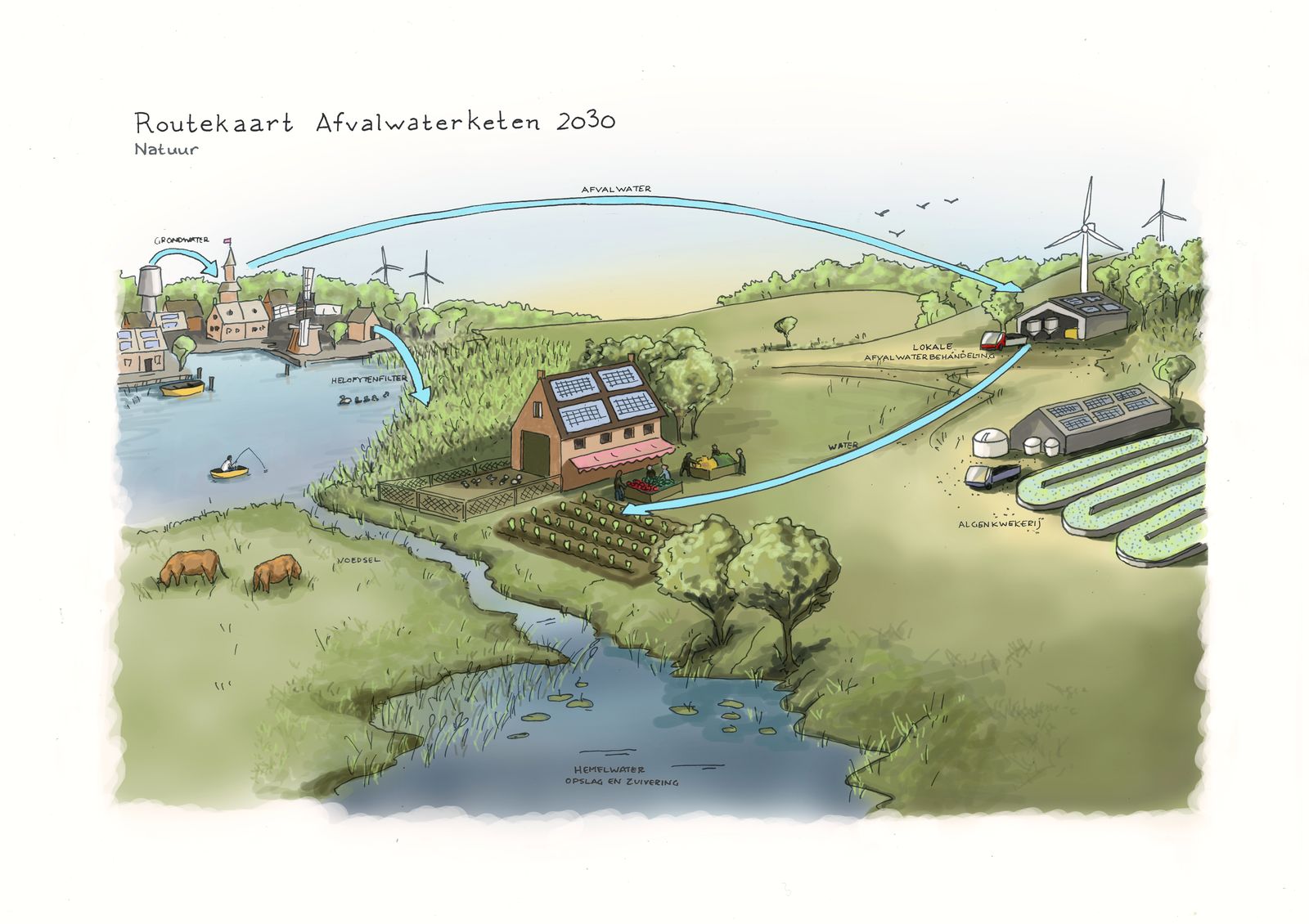
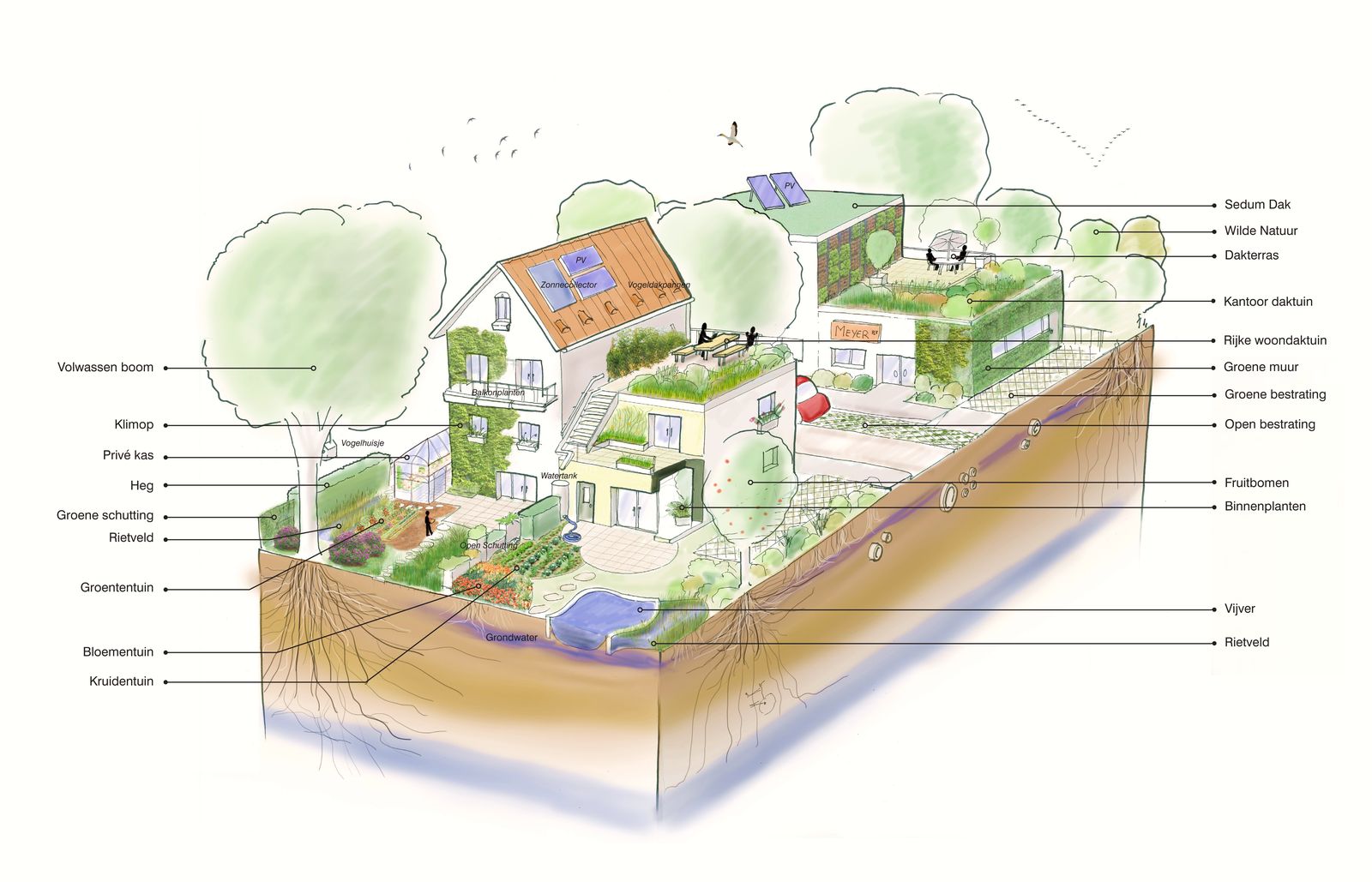
The method is Symbiosis in Development, which Except developed for its own project work and teaches here. It draws together fields that grew up separately from one another, among them the circular and bio-based economy, industrial ecology, transition theory, resilience, iterative design and social justice.
All of it is published free to read at ThinkSiD.org, and Except writes up its own working positions on circularity, resilience, ESG and regenerative cities at except.eco/knowledge.
"Looking at the world from an integrated systemic perspective opens up a world of possibilities, opportunities, and actionable pathways towards a better future for all life on this earth."
Tom Bosschaertfounder